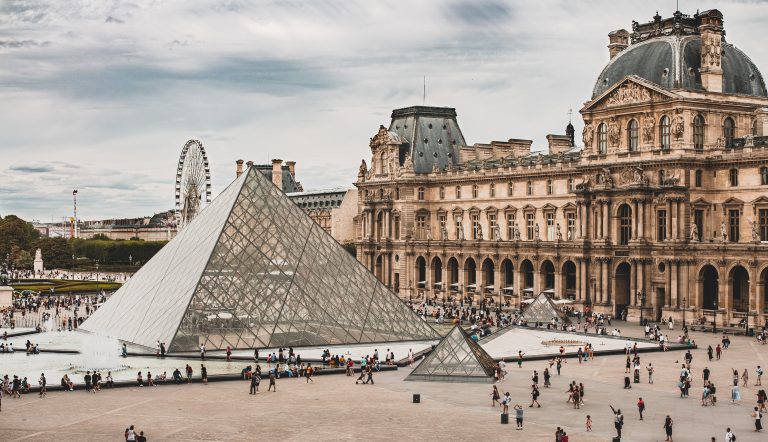
Great Louvre
The Louvre is an iconic museum located in Paris, France, that attracts millions of visitors every year. Its vast collection of art and artifacts makes it one of the world’s largest and most famous museums. The museum’s name derives from the French word “l’oeuvre,” meaning “the work,” referring to the museum’s original function as a fortress to protect the city.
History
The Louvre Museum was established in 1793, during the French Revolution, as a museum for the people of France. It was initially used to display the royal art collections, but it soon became a repository for all of the country’s confiscated art. The museum’s collection grew rapidly, and it became a national symbol of France’s cultural heritage.
In the early 19th century, the Louvre was renovated and expanded under the direction of Napoleon Bonaparte, who added the Arc de Triomphe du Carrousel and the Cour Carrée. The museum continued to grow throughout the 19th and 20th centuries, with the addition of new wings and galleries.
Collection
The Louvre’s collection is vast, with over 35,000 works of art on display, including paintings, sculptures, decorative arts, and artifacts from around the world. Some of the most famous pieces in the museum’s collection include the Mona Lisa by Leonardo da Vinci, the Winged Victory of Samothrace, and the Venus de Milo.
The Louvre also has collections of Islamic art, Egyptian antiquities, and artifacts from ancient Greece and Rome. The museum’s extensive decorative arts collection includes furniture, ceramics, and textiles from the Middle Ages to the 19th century.
In addition to its permanent collection, the Louvre hosts temporary exhibitions throughout the year, showcasing works from other museums around the world.